What should a local business do when its rankings drop after a Google update?
Google updates land without warning and the temptation is to fix everything at once. Here is a calmer sequence: confirm, diagnose, wait where needed, and act where it counts.

Confirm the drop is real and tied to the update
The first job is to establish that what you are seeing is a drop and not noise. Compare your grid average and top-three share for the seven days before the update's announced rollout to the seven days after. A drop confirmed across most points and most keywords is real. A drop at three points on one keyword is weather. Also compare the timing: Google usually announces core updates and states a rollout window, and local results can keep shifting until the rollout completes, so avoid final judgments until it is done. Related: The Google Business Profile Fundamentals That Move Rankings
Then rule out the boring explanations. Check the profile for unpublished edits, a changed primary category, a suspension notice, or an address that was altered by a user suggestion. Check that your website is up, indexable, and not returning errors on the pages that matter. A surprising share of update-week panics turn out to be a profile edit that went live the same week or a hosting issue nobody noticed.
Keep reading: Why Your Google Local Ranking Changes Block by Block, The Google Business Profile Fundamentals That Move Rankings, How Reviews Really Affect Local Search. See how MapRankr helps you local search and map pack rank tracking.
Diagnose what the update rewarded
Google rarely explains local effects in detail, but the pattern is visible in the pack itself. Look at who replaced you at the points that changed. If the winners are closer to those points, the update tightened proximity weighting and your loss is geographic. If the winners are further away but have stronger websites, more reviews, or a tighter category match, the update shifted weight toward prominence or relevance. If the winners are chains or businesses with many locations, brand strength may have gained ground. Related: Why Your Google Local Ranking Changes Block by Block
This diagnosis is the whole point of having grid data on hand before the update. Without it, you know you dropped but not against whom or where. With it, you can say something specific: we lost the north side to two competitors with exact category matches and more recent reviews, and held the south side where we are the closest option. That sentence tells you what to fix. A vague sense of having been hit does not.
Decide what to fix and what to leave alone
Some losses should be accepted, at least for now. If an update moved proximity weighting and you lost points that are simply closer to a competitor, no amount of profile editing will change the distance. Spend your effort on the points where you are within range and the loss was on relevance or prominence. Fix category mismatches, complete the services list, refresh the description to reflect what you actually do, and check that the website page for each core service is clear, fast, and specific to your location. Related: How to Rank in the Map Pack for Multiple Services
Avoid the two classic mistakes. The first is changing many things in one week, which makes it impossible to learn what worked when rankings recover. The second is reverting good changes made before the update because they happened to precede the drop. Correlation with a rollout date is not causation. If a change was sound before the update, it is almost certainly still sound after it.
Set expectations for recovery
Recoveries from update-driven drops tend to be slow and partial. Rankings often stabilize a week or two after a rollout ends, and improvements from profile and content work typically take several more weeks to show on the grid. Some positions do not come back until the next update reshuffles the weighting again. Communicate this honestly to owners or clients: the plan is to strengthen relevance and prominence steadily and to measure the effect with the same grid, not to chase a rebound. Related: Tracking Local Rankings the Right Way
Use the update as a prompt to institutionalize what should already be in place: a review request routine, a monthly profile audit, a content calendar that adds one genuinely useful service or neighborhood page per month, and a tracker that logs results so that the next update can be diagnosed in an afternoon. Businesses that treat updates as a reason to build these habits tend to come out of the next one ahead of competitors who treated the last one as a crisis.
- Confirm the drop with before-and-after grid comparisons and wait until the rollout is finished before judging.
- Rule out profile edits, suspensions, and website errors that often coincide with update weeks.
- Diagnose by studying who replaced you and where: closer winners mean proximity, stronger winners mean relevance or prominence.
- Fix relevance and prominence where you are within range, change one thing at a time, and expect slow, partial recovery.

Julien Jimenez
Julien Jimenez is an independent software builder based in Paris. He designs, ships, and operates focused SaaS products for small businesses and independent professionals. Read the full author page.
See exactly where you rank on the map
Local search and Map Pack rank tracking. MapRankr is built to help you put this into practice.
Track my rankingsMore from the MapRankr blog
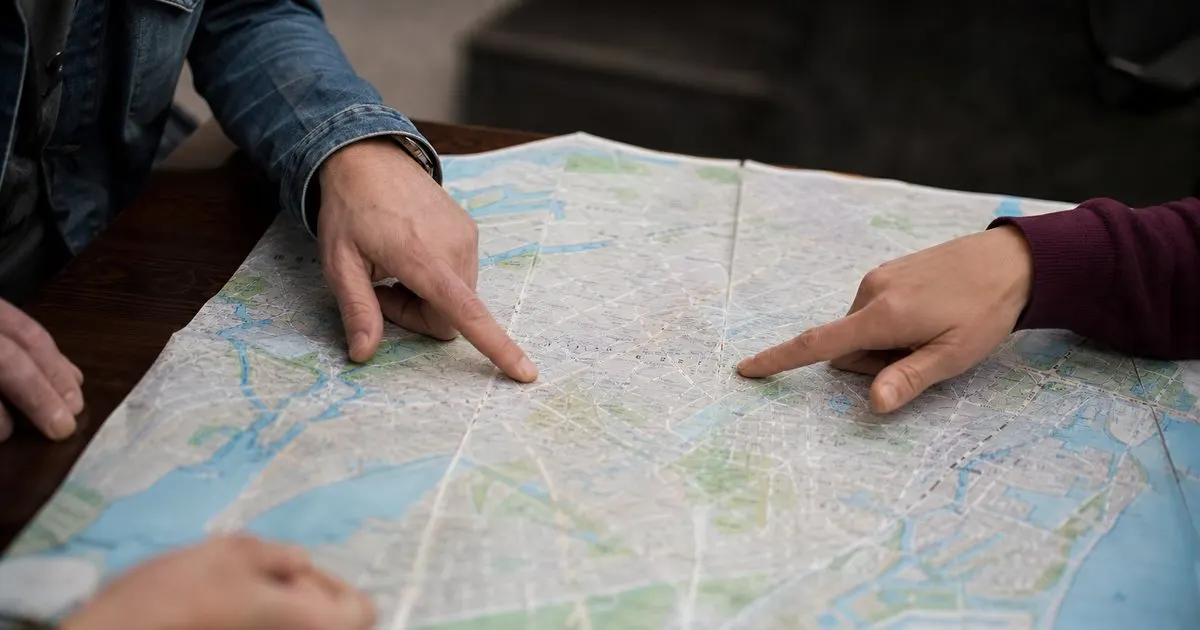
Why Your Google Local Ranking Changes Block by Block
The Google Business Profile Fundamentals That Move Rankings

How Reviews Really Affect Local Search
Get the MapRankr playbook
Practical guides on local rank tracking, straight to your inbox as we publish them. No spam, unsubscribe any time.